

With the 2025/26 financial year starting from July 1, 2025, here is a summary of tax and superannuation changes you should be aware of for the 2026 financial year.
1. Personal Income Tax Changes
1.1 Tax Rate Structure and Brackets
The following tax rates will apply from the 2025-26 financial year:
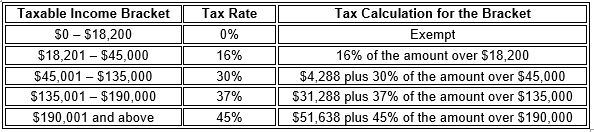
Note: A 2% Medicare Levy is added to the above.
2. Medicare Levy
2.1 Medicare Levy Surcharge
If you do not have private health insurance with hospital cover, you may have to pay the Medicare Levy Surcharge in addition to the standard 2% Medicare Levy.

For families, the threshold increases by $1,500 for each child after the first.
3. Superannuation System Changes
3.1 Increase in Employer Superannuation Contribution Rate
From July 1, 2025, the employer superannuation contribution rate will increase from 11.5% to 12%.
3.2 Superannuation Contribution Limits
Concessional Contributions:
- Annual limit is $30,000, including employer contributions.
- If your balance is below $500,000 as of June 30, 2025, you can carry forward unused cap amounts from the previous five years.
Non-Concessional Contributions:
- Annual limit is $120,000.
- Depending on your super balance, you may be able to bring forward up to three years’ worth of contributions:
- Up to $1.76 million: $360,000
- $1.76 million – $1.88 million: $240,000
- $1.88 million – $2 million: $120,000
- If your balance exceeds $2 million, you cannot make non-concessional contributions.
3.3 Increase in Pension Phase Cap
The cap for the pension phase (where income and capital gains within super are tax-free) will increase from $1.9 million to $2 million.
3.4 Government Super Co-contribution
If your total income does not exceed $47,488, making a $1,000 non-concessional contribution will entitle you to a $500 government co-contribution.
Eligibility:
- Maximum $500 benefit if your income is below $47,488.
- Benefit reduces as income increases between $47,488 and $62,488.
- 10% or more income must come from employment/business activities.
- Available to residents under age 71 (excluding temporary visa holders).
- Full benefit applies if you contribute at least $1,000 as a non-concessional contribution.
Disclaimer
This material has been prepared for information purposes ONLY, and is not intended to provide, and should not be relied on without Tax/Accounting/Legal/Financial/Credit advice from a relevant qualified adviser.